ADR Regulations in Poland: What Companies Carrying Dangerous Goods Must Know
If your company sends, carries or receives dangerous goods by road in Poland, ADR applies to you – and it applies whether the load crosses a border or never leaves the country. The rules reach further than most people expect: they cover how a substance is classified, how it is packaged and labelled, what has to be written on the transport document, what equipment sits in the cab, and who in your organisation has to hold a formal qualification. Here is what the framework actually requires, and where companies operating in Poland most often get caught out.
What are the ADR regulations?
ADR is the foundation of the safe carriage of dangerous goods by road. Its purpose is to protect human life and health, the environment and property by setting out rules for the classification, packaging, labelling, documentation and carriage of substances that present a hazard. The legal basis consists of three instruments:
- the Agreement concerning the International Carriage of Dangerous Goods by Road (ADR), concluded in Geneva on 30 September 1957, together with Annexes A and B;
- Directive 2008/68/EC of the European Parliament and of the Council of 24 September 2008 on the inland transport of dangerous goods;
- in Poland, the Act of 19 August 2011 on the Carriage of Dangerous Goods (consolidated text: Journal of Laws of 2024, item 643, as amended).
The history of the ADR agreement, and why it matters
The abbreviation comes from the French name “Accord relatif au transport international des marchandises Dangereuses par Route” – the Agreement concerning the International Carriage of Dangerous Goods by Road. It was signed in Geneva on 30 September 1957 under the auspices of the United Nations Economic Commission for Europe (UNECE). Since 1 January 2021 the word “European” has been dropped from the title, because a number of parties to the agreement are now outside Europe. Annexes A and B are updated on a fixed cycle – every two years, in odd-numbered years – to keep pace with technological change and evolving safety requirements. The edition currently in force is ADR 2025, mandatory since 1 July 2025.
Where the ADR rules apply
This is the point most often misunderstood by companies new to the Polish market. ADR applies not only to international transport, but also to purely domestic carriage within every EU member state – that extension comes from Directive 2008/68/EC on the inland transport of dangerous goods. In Poland the requirements of the agreement were implemented by the Act of 19 August 2011 on the Carriage of Dangerous Goods, and they are binding on every participant in the transport operation: consignors, carriers and consignees alike. A company that never ships abroad is not outside the system.
Classes of dangerous goods
Dangerous goods are divided into thirteen hazard classes. These are: 1 (explosive substances and articles), 2 (gases), 3 (flammable liquids), 4.1 (flammable solids, self-reactive substances and solid desensitised explosives), 4.2 (substances liable to spontaneous combustion), 4.3 (substances which, in contact with water, emit flammable gases), 5.1 (oxidising substances), 5.2 (organic peroxides), 6.1 (toxic substances), 6.2 (infectious substances), 7 (radioactive material), 8 (corrosive substances) and 9 (miscellaneous dangerous substances and articles). Classes 4, 5 and 6 are split into subclasses, which is where the total of thirteen comes from – some sources simplify this to nine main classes. Each class carries its own requirements for how the goods are carried and how they are marked.
Classification and the UN number
Correct classification of the material being carried is one of the most important elements of the whole system. Every dangerous good is assigned a four-digit UN number – either specific to that substance or generic, including “N.O.S.” (not otherwise specified) entries covering groups of substances with similar properties. The UN number is what makes the transport requirements unambiguous, and it appears in the transport documentation, on the packages and on the vehicle marking.
Packaging requirements
The regulations set detailed requirements for the packaging used to transport dangerous materials. Packaging must be certified – carrying UN marking that confirms it has passed the prescribed performance tests – and must be matched to the type of substance and its packing group. Packaging chosen incorrectly raises the risk of leakage, fire or environmental contamination, and it is one of the first things an inspector looks at.
Vehicle marking
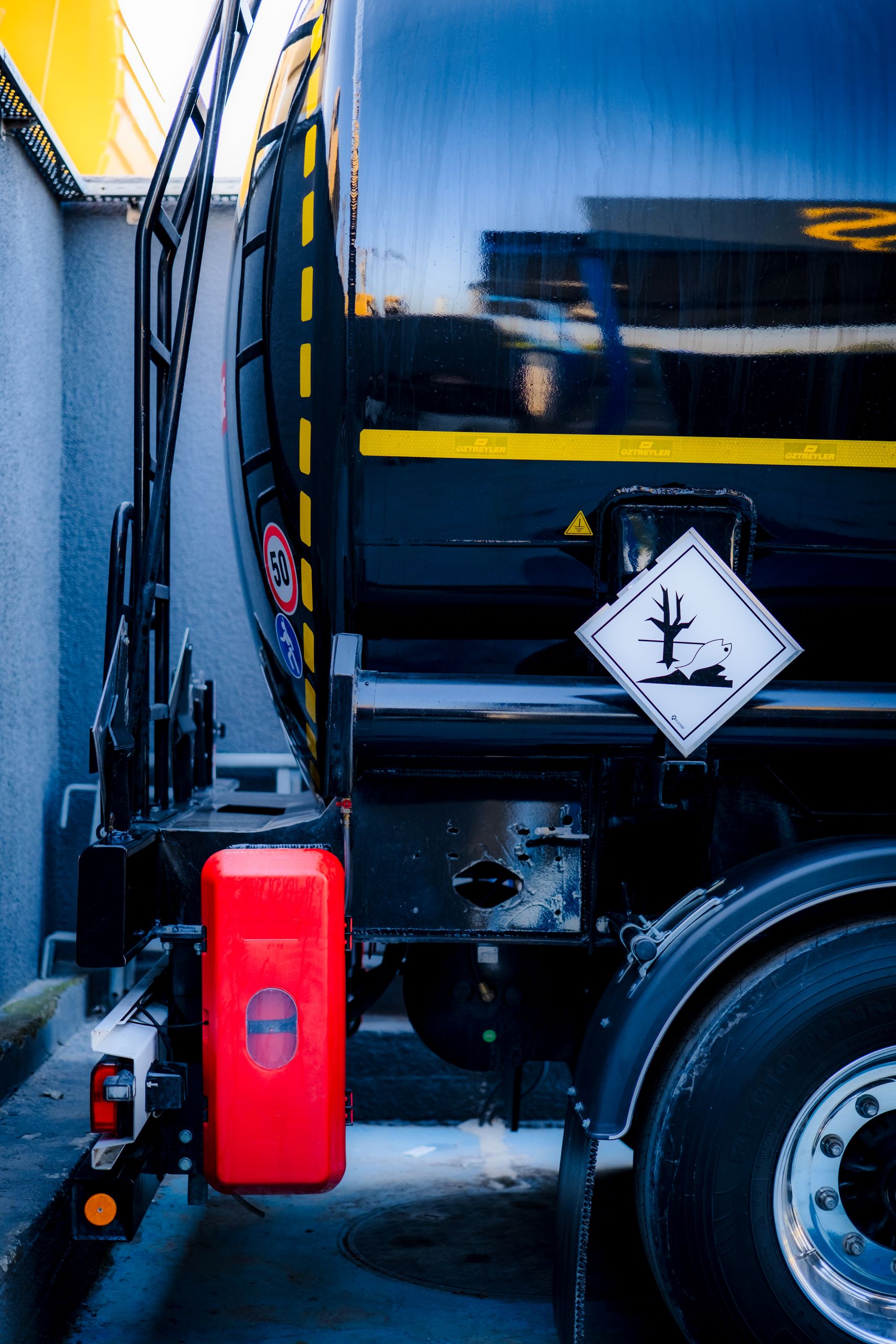
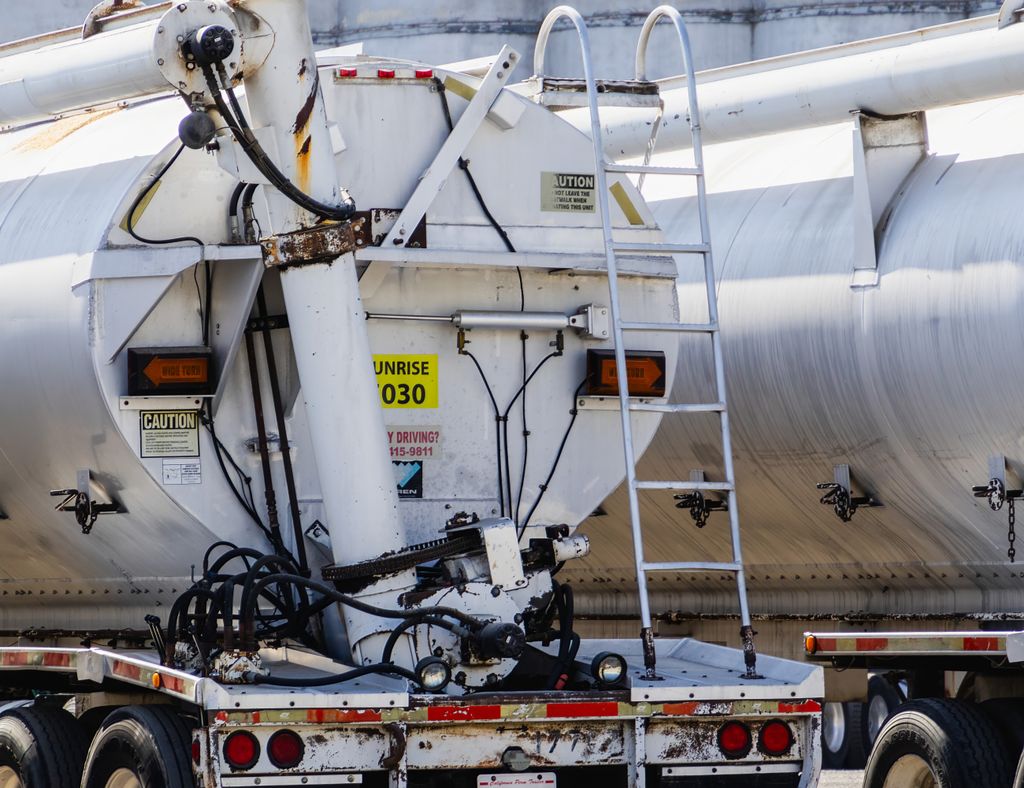
Every vehicle carrying dangerous goods must be properly marked. In practice this means orange-coloured plates – either plain, or bearing the hazard identification number and the UN number – together with hazard labels indicating the class of the material on board. The marking exists so that emergency services can identify the type of hazard immediately at the scene of a road accident, without waiting for paperwork.
Transport documentation
Documentation plays a decisive role during an ADR movement. Under Chapter 5.4 of ADR, the transport document must include, among other things: the UN number preceded by the letters “UN”, the proper shipping name, the numbers of the hazard label models, the packing group (where one has been assigned), the quantity of material being carried, and the details of the consignor and the consignee. Separately from the transport document, where the carriage is subject to the full ADR requirements, the driver’s cab must contain the written instructions required by 8.1.5 of ADR – and it is the carrier who has to supply them.
Driver qualifications
Drivers performing ADR carriage must hold the appropriate qualification. The condition for doing this work is completing specialist training and obtaining an ADR certificate confirming knowledge of the applicable rules and of safe transport practice. The certificate is valid for five years, and renewing it requires completing refresher training and passing the examination before the expiry date – let it lapse and the driver starts from the beginning. Training covers both theory and practical conduct in emergency situations. If you need to arrange this for your team, see our dedicated ADR training and ADR/RID workplace training.
Obligations on businesses
Companies involved in the carriage of dangerous goods have to meet a range of organisational requirements. Participants in the transport operation – and since 31 December 2022 that includes consignors, not just carriers – must appoint a dangerous goods safety adviser (DGSA). The adviser oversees compliance with ADR, prepares the annual report and analyses any incidents connected with transport. This is the obligation companies most often discover too late, usually during an inspection. We provide permanent ADR/RID adviser support and prepare the annual ADR/RID report.
Vehicle equipment
ADR also governs what has to be carried on the vehicle. Under section 8.1.5, transport units carrying dangerous goods must have, among other items: fire extinguishers of the prescribed capacity, a wheel chock for each vehicle, two self-standing warning signs, a warning vest and a torch for each member of the crew, protective gloves and eye protection – plus, depending on the class of material being carried, the additional equipment specified in the written instructions.
Exemptions and quantity limits
Quantity limits and exemptions are a significant part of the ADR system. The main ones are carriage in limited quantities (LQ), carriage in excepted quantities (EQ), and the exemption under 1.1.3.6 of ADR relating to quantities carried per transport unit. These reduce the administrative burden – for example, orange plates or a driver’s ADR certificate may not be required – but they do not release you from the basic safety rules, including correct packaging and correct marking of the packages. Treating an exemption as though ADR simply does not apply is a common and expensive mistake.
Consequences of non-compliance
Failing to comply with ADR can carry serious legal and financial consequences. Checks carried out by the authorised services – in Poland, primarily the Road Transport Inspectorate (Inspekcja Transportu Drogowego, ITD) – may end in substantial administrative penalties under the Act on the Carriage of Dangerous Goods, in the vehicle being detained, or in a prohibition on continuing the journey until the irregularities identified have been put right. A stopped vehicle with a live load is a problem that grows by the hour.
Keeping up with changes to ADR
Because ADR is revised on a fixed cycle, businesses and drivers need to track the changes rather than assume last year’s procedures still hold. New editions are published every two years, with a six-month transitional period running from 1 January to 30 June of the odd-numbered year. Revisions can affect classification, packaging, marking, documentation or vehicle equipment – which is why an up-to-date reading of the rules is a condition of staying compliant, not an optional extra. An ADR/RID audit is the quickest way to find out where a company stands after a revision.
Summary
ADR plays a central role in keeping the road transport of dangerous goods safe. Complying with it limits the risk of accidents, reduces the consequences when something does go wrong, and raises the level of protection for people, the environment and infrastructure. For companies in the transport sector, knowing and applying the ADR rules is not only a legal obligation – it is part of running the business responsibly.
If you are moving dangerous goods in or through Poland and are not certain where your obligations begin, it is worth having someone check it before an inspector does. EHS Consulting supports companies across Poland with the full range of ADR and RID services – from appointing a safety adviser and running audits, through driver and staff training, to the annual report. Get in touch and tell us what you carry; we will tell you what the rules require of you.