When and At Which Workstations Must Employers Provide Water to Employees in Poland?
The question of the employer’s obligation to provide water to employees resurfaces like clockwork — mainly in spring and summer, when outside temperatures begin to rise. Contrary to what many assume, providing employees with drinking water in Poland is an obligation that applies year-round.
Why? Under §112 of the Regulation of the Minister of Labour and Social Policy on general occupational health and safety provisions (Rozporządzenie w sprawie ogólnych przepisów bezpieczeństwa i higieny pracy), the employer in Poland is obliged to provide all employees with water fit for drinking (i.e. free from pathogenic microorganisms and parasites in numbers that could pose a potential risk to human health) or other beverages. This naturally raises the question:
Is Tap Water Always Safe to Drink in Poland?
When water leaves the treatment plant and reaches your workplace premises, it is treated water — and therefore safe for consumption. However, whether the water coming from the tap is uncontaminated depends on the condition of the pipes within the building. To consider tap water safe for consumption without prior boiling, regular water quality testing should be commissioned.
Alternatively, the employer may opt for bottled water or install water dispensers on the premises. If choosing the latter option, it is important to note that under Polish OHS regulations, the water source must be located no more than 75 metres from the workstation.
The choice of drinking water source is entirely at the employer’s discretion.
So where does the common belief come from that…
Are Employees in Poland Only Entitled to Water During Summer?
The Regulation of the Council of Ministers on preventive meals and beverages (Rozporządzenie Rady Ministrów w sprawie posiłków profilaktycznych i napojów) states the following:
Ҥ4.1. The employer shall provide beverages to employees working:
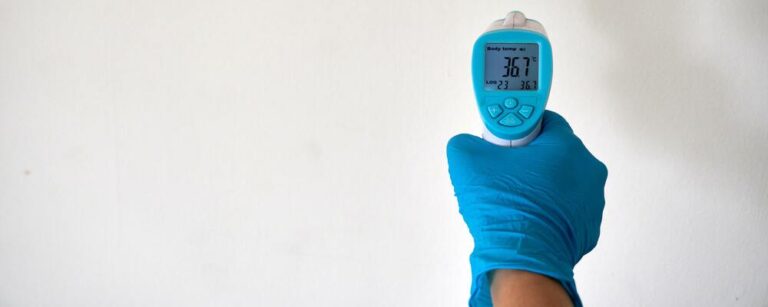
1) in hot microclimate conditions characterised by a Wet Bulb Globe Temperature (WBGT) index value above 25°C,
2) in cold microclimate conditions characterised by a Wind Chill Index (WCI) value above 1000,
3) in outdoor spaces at ambient temperatures below 10°C or above 25°C,
4) in work involving physical exertion causing an effective energy expenditure per shift exceeding 1,500 kcal (6,280 kJ) for men and 1,000 kcal (4,187 kJ) for women,
5) at workstations where the temperature caused by atmospheric conditions exceeds 28°C.”
Polish law does not specify what type of beverages must be provided — except in the situation described in point 1, where beverages must be enriched with mineral salts and vitamins. The same provision also states that the temperature of the beverages should depend on working conditions:
High temperatures — cold beverages
Low temperatures — hot beverages
In summary: regardless of weather conditions and workplace temperatures, the employer in Poland is obliged to provide employees with drinking water at all times. Depending on working conditions, the employer may additionally be required to provide appropriately hot or cold beverages.
The workstations at which employees should receive preventive meals and beverages, and the details of their provision, are determined by the employer in agreement with workplace trade union organisations. Where no such organisations exist, the employer determines this after obtaining the opinion of employee representatives.
It must be remembered that employers are not permitted to pay employees a monetary equivalent in lieu of providing preventive beverages and meals. Where hot beverages such as tea or coffee must be provided, the employer is required to organise appropriate hygienic and sanitary conditions for their preparation.
Summary — When Are Employees in Poland Entitled to Drinking Water?
Water or other beverages must be provided continuously and free of charge by the employer, regardless of the type of work performed or the time of year. At higher ambient temperatures, water requirements will increase — and the employer may not ration water consumption. For particularly strenuous work, preventive beverages must be provided, which in specific circumstances must be enriched with vitamins and minerals. Preventive meals and beverages must be provided exclusively on days when work is being performed under conditions that justify their provision.
Tap water, bottled water or a dispenser — which option will be most beneficial for your business? If you have questions about your obligations under Polish OHS law, contact EHS Consulting. We offer advice, conduct OHS training, and provide consultancy services. We will help you with all your obligations and formalities — contact us.