
Tick Bite at Work – How to Recognise It and What to Do Next? Is It a Workplace Accident?
The tick season now runs in practice from early spring through late autumn, and mild winters mean ticks can stay active all year round. Employees who work outdoors are especially exposed to bites: forestry workers, farmers, municipal-greenery and road-maintenance crews, surveyors, construction teams, and field-service technicians. The issue is not just a small wound – ticks carry serious diseases, above all Lyme disease and tick-borne encephalitis (TBE). For an OHS team, it matters both how to respond correctly after a bite and how to classify the event correctly under the relevant legal rules.
How to recognise a tick bite
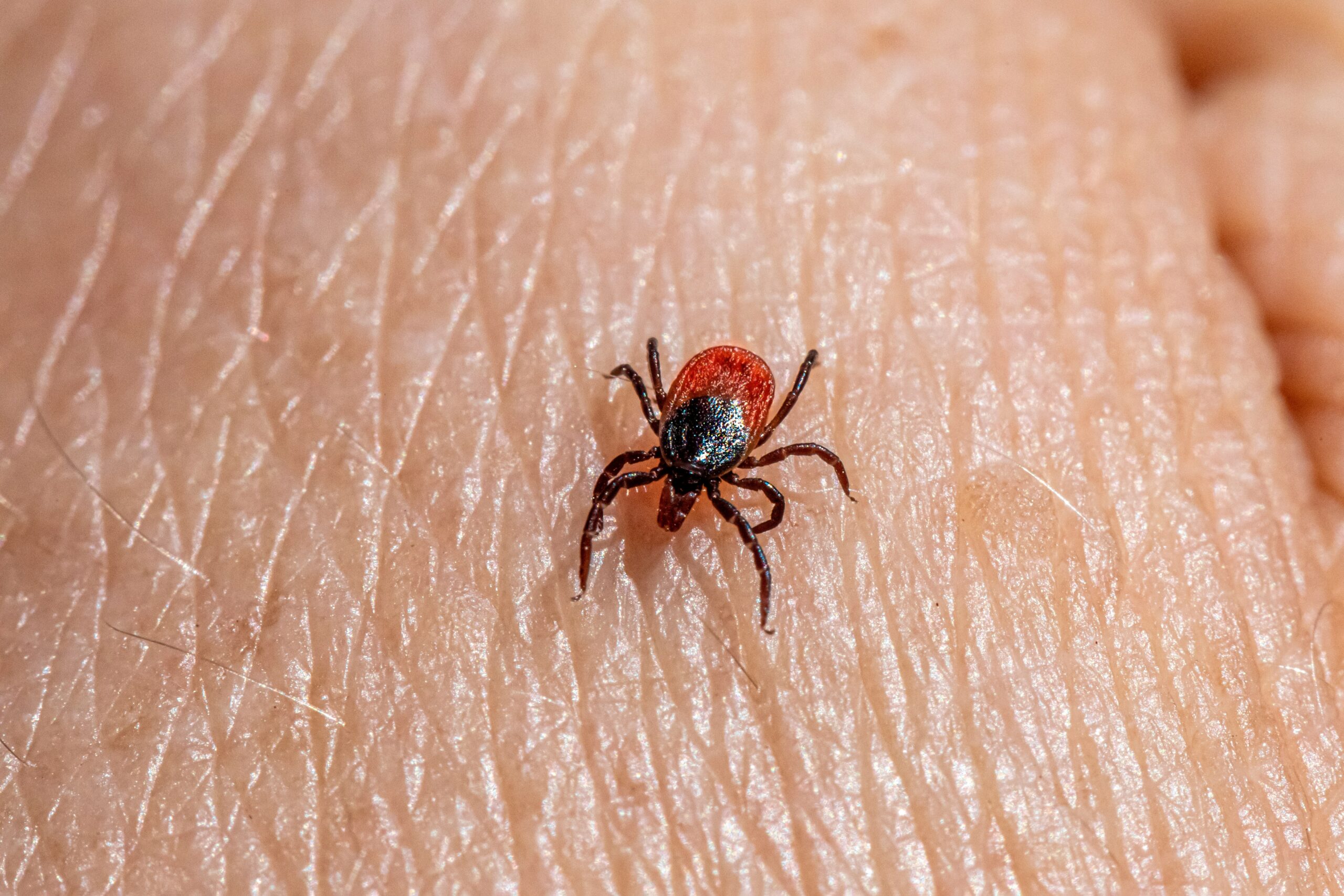
The bite itself is usually painless – tick saliva contains substances with an anaesthetic effect, so the tick can go unnoticed for many hours. It is most often found as a small, dark lump embedded in the skin. Ticks favour warm, moist areas: armpits, groin, the backs of the knees and elbows, behind the ears, the hairline, and the scalp. For this reason, after any fieldwork the whole body should be checked carefully, paying particular attention to these areas.
How to remove a tick? What to do right after a bite
A tick should be removed as quickly as possible – the longer it stays embedded, the higher the risk of pathogen transmission. Grip it with tweezers or a dedicated tick-removal tool as close to the skin as possible and pull it out with a firm, steady motion, perpendicular to the skin’s surface, without twisting or crushing it. Never coat the tick in grease, butter, alcohol, or other substances – an irritated tick will release stomach contents into the wound, which increases the risk of infection. After removal, disinfect the site, and record the date and circumstances of the bite – this can matter later both for diagnosis and for any post-accident documentation procedure.
Erythema migrans and other symptoms that should raise concern
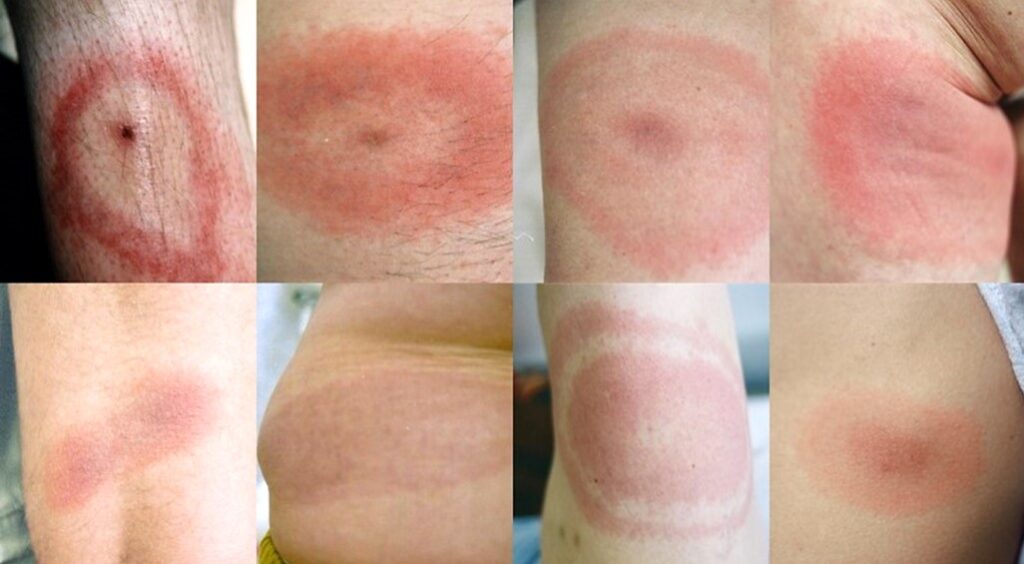
A characteristic early symptom of Lyme disease is erythema migrans – an expanding red or bluish-red patch, often with a clearer centre, usually appearing 3 to 30 days after the bite. It may be accompanied by flu-like symptoms: fever, muscle and joint pain, and weakness. Tick-borne encephalitis (TBE) progresses in two phases and, in more severe cases, affects the nervous system. Any of these symptoms calls for prompt medical consultation, together with clear information about the fact and date of the tick bite.
Is a tick bite a workplace accident under Polish law?
Under Article 3 of Poland’s Act of 30 October 2002 on social insurance for workplace accidents and occupational diseases, a workplace accident is a sudden event caused by an external factor, resulting in injury or death, that occurred in connection with work. A tick bite can meet all four conditions at once. The “sudden event” condition is met because – even though the tick feeds over time – Polish case law treats the bite itself as the sudden event. The external cause is the tick acting on the body from outside. The injury is the disruption of tissue and introduction of pathogens. The work connection exists when the bite occurs while the employee is performing their duties in a location they are present in because of work. If all these conditions are met, the event must be reported to the supervisor and handled through a post-accident procedure, with a report drawn up by the accident investigation team.
Lyme disease and TBE as occupational diseases
It is worth distinguishing the bite itself from its consequences. Lyme disease and tick-borne encephalitis are listed among Poland’s recognised occupational diseases as infectious or parasitic diseases, or their after-effects (item 26 of the schedule to the Regulation of the Council of Ministers of 30 June 2009 on occupational diseases). In practice, this means that in an occupationally exposed employee, a disease that develops can be recognised as an occupational disease, while the bite itself is treated as a workplace accident. The classification depends on the circumstances and triggers different procedures: a post-accident investigation carried out by the accident investigation team, or an occupational-disease procedure, opened by notifying the relevant sanitary inspector and confirmed by a medical opinion.
Employer’s obligations and prevention
Ticks and the pathogens they carry (Borrelia burgdorferi, the TBE virus) are harmful biological agents within the meaning of the Regulation of the Minister of Health of 22 April 2005 on harmful biological agents in the work environment and the protection of the health of workers occupationally exposed to them. An employer with staff working in the field is required to include this hazard in the occupational risk assessment, provide suitable protective measures (clothing that covers the body, repellents), make TBE vaccination available, equip first-aid kits with tick-removal tools, and train employees in prevention and post-bite procedures. If a bite occurs – as with any potentially accident-related event – the employee should notify their supervisor immediately, and the employer must provide first aid and follow the correct procedure. Awareness of the risk, a routine body check after fieldwork, and prompt tick removal remain the most effective forms of protection.
Want to check whether your company’s occupational risk assessment covers biological hazards such as ticks? Take advantage of our OHS consultancy.