Will AI Take Our Jobs or Our Focus? New Psychosocial Risks at Work
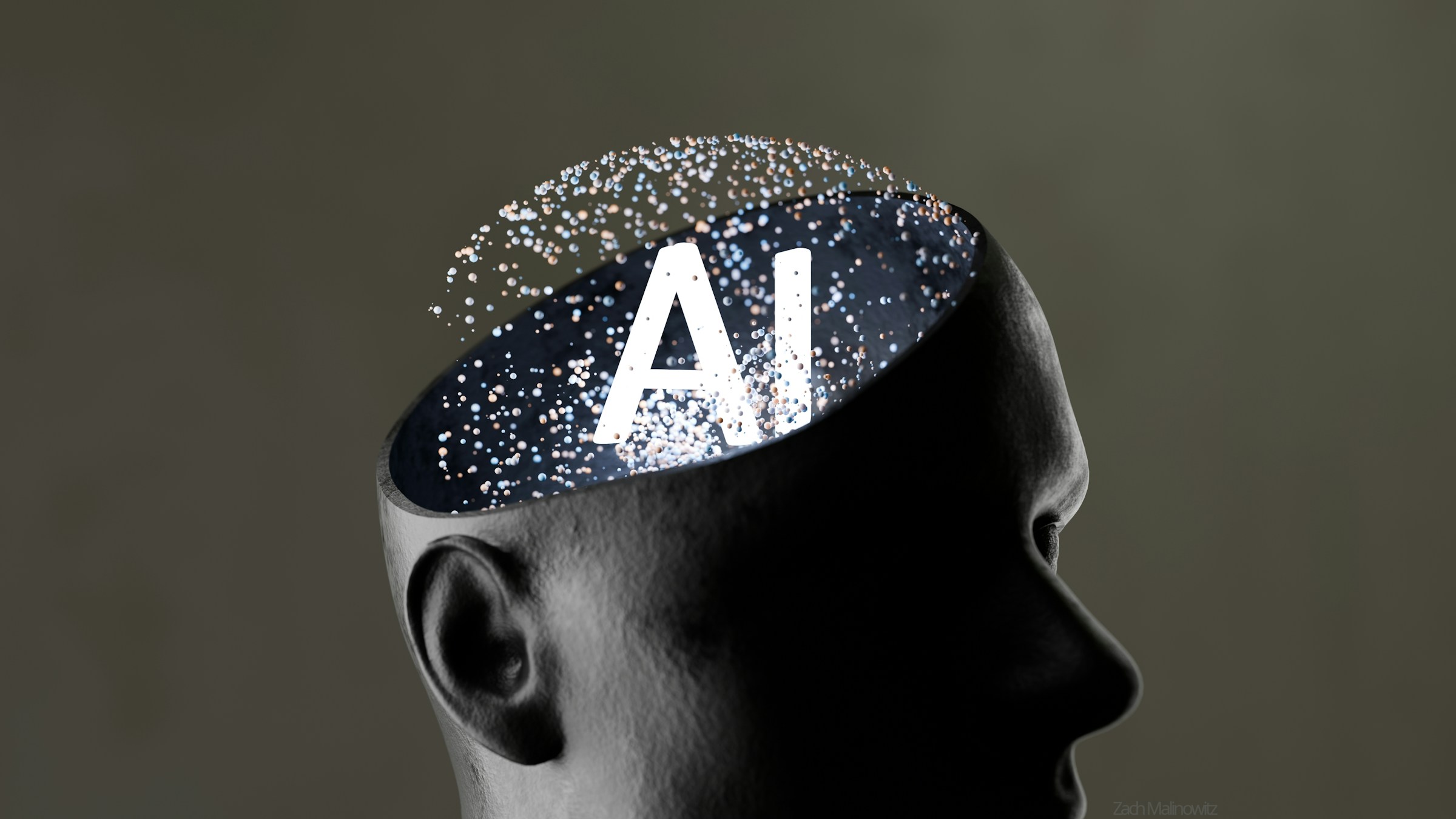
Is artificial intelligence becoming a new, informal boss – one that never sleeps, never makes mistakes and keeps measuring our performance around the clock?
The debate about AI usually focuses on the prospect of mass layoffs. Yet in the everyday reality of companies, the real upheaval is happening not in headcount but in people’s minds. Long before algorithms replace anyone at a desk, they are already assigning tasks, rating the pace of work, analysing computer activity and suggesting HR decisions.
The Polish Data Protection Authority (UODO) and the European Agency for Safety and Health at Work (EU-OSHA) regularly stress the need to protect workers against digital surveillance and automated decision-making. Their conclusion is the same: rather than taking away jobs, AI is increasingly taking away our peace of mind, our autonomy and our ability to focus.
Is artificial intelligence becoming a new, silent psychosocial hazard in the workplace? Below we look at how digital transformation is turning into an occupational safety and mental health challenge – and what employers in Poland should do about it.
AI as a psychosocial hazard
Psychosocial hazards are the aspects of work organisation and management that can lead to stress, burnout and mental health problems – and, as a result, to errors and accidents. They traditionally include excessive workload, lack of control over how the work is done, an unclear role, lack of support and unfair treatment. AI-based tools can amplify every one of these factors at the same time.
EU-OSHA describes this phenomenon as algorithmic management. It refers to a situation in which an IT system does not just support the worker but takes over functions previously reserved for a manager: it assigns tasks, sets the pace, monitors progress, evaluates results and sometimes recommends rewards or sanctions.
The scale is already significant. In EU-OSHA’s OSH Pulse 2025 survey, as many as 48% of EU workers said that digital technologies set the pace of their work, 27% that tasks or shifts are allocated to them automatically by a system, and 25% that they are monitored with digital tools. At the same time, 44% report severe time pressure or work overload, and 29% report stress, depression or anxiety caused or made worse by work.
Loss of autonomy
A sense of control over one’s own work is one of the strongest protective factors against occupational stress. When the order of tasks, the time allowed for them and the way they are done are dictated by an algorithm, the worker loses room for their own judgement and experience. Work becomes a sequence of on-screen instructions, and the person becomes the executor of decisions whose logic they often do not know and cannot challenge.
In practice, this shows up as:
- lower engagement and a weaker sense of purpose at work,
- “learned helplessness” – giving up on initiative because “the system knows better anyway”,
- frustration at being unable to explain unusual situations that the algorithm does not take into account.
Algorithmic surveillance and the constant feeling of being watched
UODO has been warning about excessive employee surveillance for years. AI-assisted monitoring is not limited to cameras: it includes analysing keyboard and mouse activity, response times to messages, location and even tone of voice in conversations with customers. The constant feeling of being watched by an algorithm triggers a permanent state of alertness and stress. The body operates in “combat readiness” mode, which in the long run contributes to fatigue, sleep disorders, psychosomatic complaints and occupational burnout.
Paradoxically, excessive monitoring also lowers the quality of work. Employees start optimising what the system measures (such as the number of clicks or closed tickets) rather than what really matters to the company and its customers.
Dimensions of psychosocial pressure
The impact of AI on employee well-being cannot be reduced to a single factor. It consists of overlapping sources of pressure that reinforce one another.
Loss of autonomy and meaning
The more decisions the system makes, the fewer are left for people. Experienced specialists feel this most acutely, as their knowledge and intuition are reduced to “approving” the algorithm’s suggestions. Loss of control over one’s work is one of the best-documented predictors of occupational stress.
Control and monitoring
Digital surveillance works non-stop and without context. The algorithm does not know that an employee spent 20 minutes explaining a procedure to a new colleague, or that a call with a difficult customer simply took longer. All it sees is an “empty” activity window. The feeling that every moment is recorded and assessed takes away the right to natural breaks and mistakes, which are an inherent part of human work.
FOBO – the fear of becoming obsolete
FOBO (Fear of Becoming Obsolete) is the fear that one’s skills will no longer be needed and that a machine will take one’s place. Even if a company is not planning any cuts, the media narrative about “AI taking jobs” is enough to cause chronic job insecurity. Its effects include:
- pressure to keep upskilling at the expense of rest,
- hiding mistakes and difficulties with new tools,
- competition instead of cooperation within the team,
- presenteeism – coming to work despite illness or exhaustion.
Performance pressure and unrealistic targets
AI can easily calculate an “optimal” work pace – often based on the results of the fastest employees or on data from ideal conditions. Targets set this way become the benchmark for everyone, regardless of age, length of service, health or the variability of tasks. When results are also compared in real-time rankings, a spiral of ever-faster work begins. This is no longer just a mental health issue: haste, skipping procedures and fatigue are classic causes of accidents at work and of musculoskeletal disorders.
Who is responsible for AI decisions?
Increasingly, an employee is expected to “approve” a system’s recommendation: a quote, a diagnosis, a candidate assessment, a credit decision. Formally, the responsibility lies with the human, but in reality they know little about how the algorithm reached its result. This creates a double bind: if they ignore the suggestion and get it wrong, they will be held accountable; if they trust a system that gets it wrong, the same applies. An unclear division of responsibility is itself a psychosocial factor, known as role conflict and role ambiguity.
Cognitive overload and loss of focus
AI tools generate content, summaries, alerts and notifications faster than people can process them. Constantly switching attention between a messenger, email, a task system and an AI assistant fragments the working day. The brain needs time to regain full concentration after every interruption. The result is work that takes longer, is more tiring and contains more errors. In jobs that require vigilance – at machines, in transport, in warehouses – distraction is a direct accident risk.
The employer’s role – what the law says
Introducing AI in a company is not just a technology decision. Under Article 207 § 2 of the Polish Labour Code, the employer must protect employees’ health and life, and under Article 226 it must assess and document occupational risk. New tools that change the way work is organised should therefore also be reflected in the occupational risk assessment, including psychosocial factors. On top of that come data protection rules and regulations on artificial intelligence itself.
Algorithmic transparency
Employees have the right to know whether and how they are monitored and assessed by a system. In Polish law, the key provisions are:
- Articles 222–223 of the Labour Code – CCTV, monitoring of business email and other forms of monitoring are permitted only for specific purposes and to a specific extent; they must be described in the work regulations, the collective agreement or a notice, and employees must be informed at least 2 weeks before monitoring starts;
- GDPR – the data minimisation principle, the duty to inform, which also covers information about the logic of automated decision-making (Articles 13–15), and, for systems likely to result in a high risk to individuals’ rights, a data protection impact assessment (DPIA, Article 35);
- AI Act (Regulation (EU) 2024/1689) – since 2 February 2025, the use of emotion recognition systems in the workplace has been prohibited (except for medical or safety reasons). AI systems used for recruitment, task allocation, monitoring and evaluation of employees are classified as high-risk. Following the adoption of the Digital Omnibus package, the obligations for this category will apply from 2 December 2027. They will include human oversight and informing employees and their representatives before the system is deployed.
Transparency is also good practice that goes beyond the legal minimum: explaining to the team what data the tool collects, what it is used for, who has access to it and how a result can be challenged. A system people understand causes far less anxiety than a “black box”.
Human in the loop
Article 22 GDPR gives individuals the right not to be subject to a decision based solely on automated processing which produces legal effects concerning them or similarly significantly affects them. In an employment context, this covers, for example, dismissals, bonuses, promotions and performance reviews. The AI Act and Directive (EU) 2024/2831 on platform work, which Member States must transpose by 2 December 2026, point in the same direction.
In practice, this means that:
- key HR decisions are made by a person, with AI playing a supporting role only,
- the person overseeing the system has the real competence, time and authority to override its recommendation,
- employees have a clear way to appeal a decision and to present their side,
- responsibility for AI-supported decisions is written down rather than assumed.
This is a direct answer to the responsibility dilemma described above.
The right to disconnect
Polish law does not yet provide a general “right to be offline”. However, working time limits and minimum rest periods apply: 11 hours of daily rest and 35 hours of weekly rest (Articles 132–133 of the Labour Code). Expecting constant availability after hours may breach them. At EU level, work is under way on the Quality Jobs Act. The second phase of the consultation of the social partners, covering among other things algorithmic management and AI at work, closed on 28 September 2026, and the new legislation is also expected to draw on earlier consultations on the right to disconnect and telework. The proposal is expected at the end of 2026.
There is no point in waiting for new rules. Setting clear limits on notifications and protecting staff from constant cognitive overload is essential for maintaining focus and preventing accidents.
Good practice for employers
- Include AI in your occupational risk assessment – identify the jobs where an algorithm sets the pace, allocates tasks or monitors work, and assess the related psychosocial hazards.
- Consult employees on new tools – involve employee representatives and the OSH service when the tool is being selected, not only after it has been launched (Article 23711a of the Labour Code).
- Keep monitoring to the necessary minimum – collect only the data needed for a specific purpose and regularly review whether monitoring is still justified.
- Set realistic targets – have people review the targets calculated by the system, taking into account individual differences, breaks and tasks the algorithm cannot see.
- Introduce a digital communication policy – define hours when no messages are sent, rules for notifications and blocks of time for focused work.
- Train and support – build skills for working with AI, train managers – who carry their own health and safety responsibilities – to recognise the signs of overload, and provide access to psychological support, for example as part of a wellbeing at work programme.
- Communicate your plans for employment – a clear message about how AI will change roles in the company and what training the employer will provide is the most effective tool against FOBO.
Summary
Artificial intelligence does not have to be a threat. It can relieve employees of routine tasks, improve safety and free up time for work that requires human judgement. There is one condition: introducing AI must be treated like any other change in the working environment that affects health and safety.
The biggest risk today is not losing one’s job but losing autonomy, a sense of control and the ability to focus. Constant surveillance, unrealistic targets, unclear responsibility and information overload lead to stress, burnout and errors – and, ultimately, to accidents at work.
The law – the Polish Labour Code, GDPR, the AI Act and upcoming EU legislation – sets the direction: transparency, a human in the loop and the right to rest. Employers who adopt these principles now will gain not only compliance but, above all, a healthier, more engaged and more focused team.
How can EHS Consulting help?
We help employers in Poland reflect new technologies in their occupational risk assessment, including psychosocial hazards, prepare internal procedures and policies, and run training for managers and employees. Find out more about our OHS consultancy.
Sources
- EU-OSHA, OSH Pulse 2025 – Occupational safety and health in the era of climate and digital change (summary)
- Regulation (EU) 2024/1689 – AI Act
- Freshfields, EU AI Act unpacked #34: The final Digital Omnibus on AI
- Directive (EU) 2024/2831 on improving working conditions in platform work
- European Commission, second-phase consultation on the Quality Jobs Act
- Act of 26 June 1974 – Polish Labour Code (Articles 222–223, 132–133, 207, 226, 23711a)
- Regulation (EU) 2016/679 – GDPR (Articles 13–15, 22, 35)